
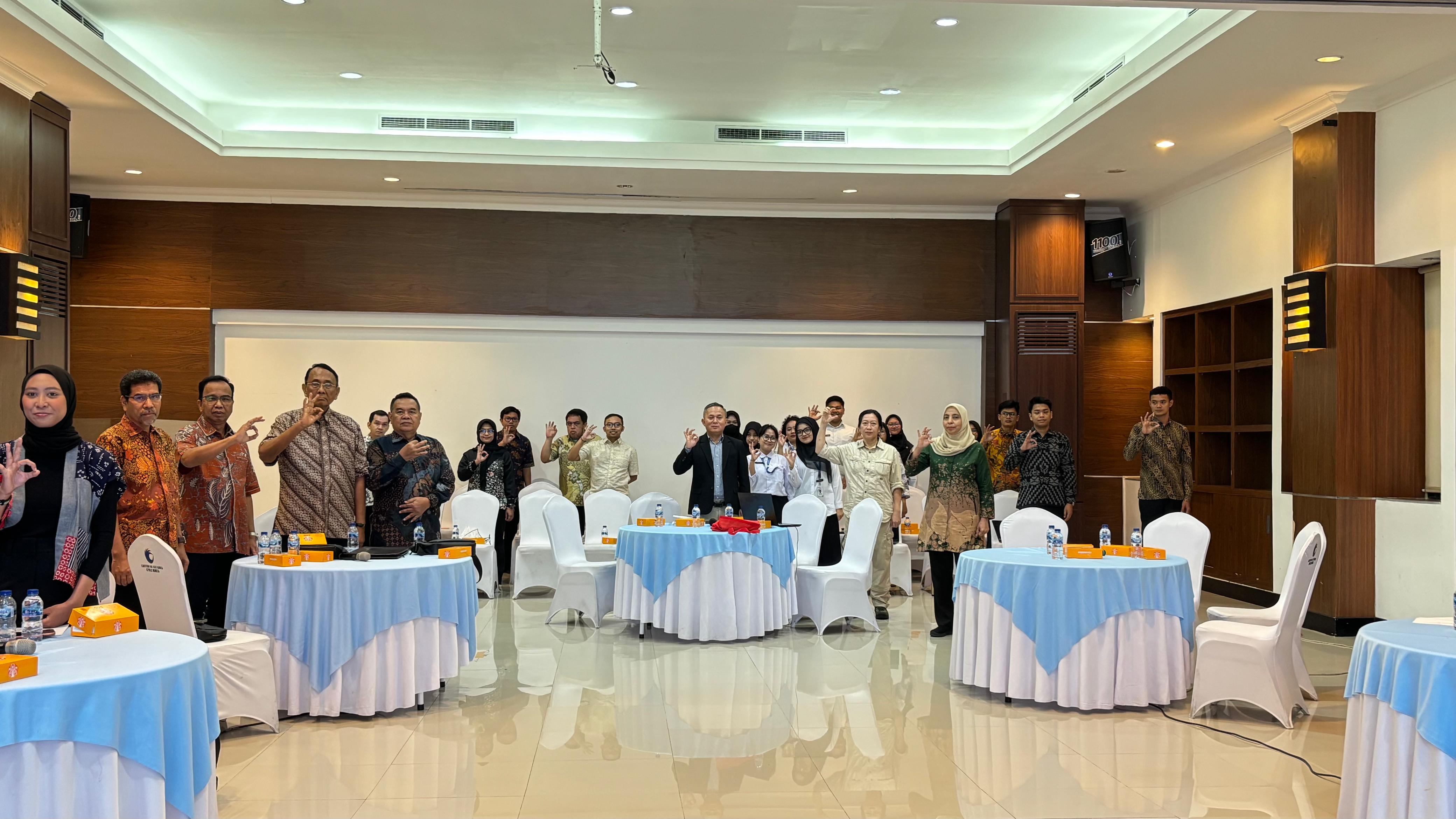
Jakarta, 24 October 2025 – The Foundation for International Human Rights Reporting Standards (FIHRRST) participated in the Consolidation Meeting on the Draft Presidential Regulation on the Implementation of Business and Human Rights Compliance Assessment. The meeting was held to discuss the formulation of a new presidential regulation following the expiration of Presidential Regulation No. 60 of 2023 concerning the National Strategy on Business and Human Rights (Stranas BHAM), and in alignment with Law No. 59 of 2024 on the National Long-Term Development Plan (RPJPN) 2025–2045.
Deputy Minister of Human Rights Mugiyanto Sipin emphasized that the upcoming regulation will serve as a political commitment and a direct derivative of the RPJMN mandate, which requires human rights assessments for corporations. He explained that while many countries have already implemented human rights due diligence, Indonesia is still in the process of adopting the UN Guiding Principles on Business and Human Rights (UNGPs) into national regulations. Mugiyanto highlighted that with the expiration of Presidential Regulation No. 60/2023 in September, there is currently a regulatory gap that must be filled to ensure the continued implementation of business and human rights initiatives.
During the discussion, Sofia Alatas, Coordinator of International Cooperation at the Directorate General of Human Rights, clarified the objectives of the meeting. She outlined the development of business and human rights policies in Indonesia, the urgency of establishing a national human rights due diligence framework, the implementation results of Stranas BHAM, and the roadmap for the upcoming national human rights audit policy.
Representing FIHRRST, Makarim Wibisono, Co-Founder of FIHRRST, delivered a presentation titled Mainstreaming Business and Human Rights Across Ministries in Indonesia. He explained the connection between human rights issues and the roles of different ministries, highlighting the importance of clear business and human rights standards and the urgent need to apply human rights due diligence in Indonesia. During his presentation, Makarim stated, “Human rights are universal, but their application must always be contextualized within Indonesia’s national realities,” emphasizing that Indonesia must adapt global principles to fit its national priorities and social and economic conditions. He also proposed strategies to strengthen cooperation between the economic, business, and human rights sectors through better regulations, technical support, and collaboration among ministries.
FIHRRST’s Operational Director, Ali Rahmadi, further elaborated on the Draft Presidential Regulation on Business and Human Rights Compliance Assessment, emphasizing the importance of integrating human rights principles into business practices. He explained that FIHRRST’s efforts are in line with the government’s initiative to strengthen the national framework on business and human rights following the expiration of Presidential Regulation No. 60 of 2023 on the National Strategy for Business and Human Rights (Stranas BHAM) and in accordance with Law No. 59 of 2024 on the National Long-Term Development Plan (RPJPN) 2025–2045. Ali highlighted that the upcoming regulation represents a crucial step toward institutionalizing human rights due diligence across corporate activities through stronger collaboration among government institutions, the private sector, and civil society. He stated, “In line with our shared goals, our focus right now should not be on assessing compliance levels, but on building the systems, mechanisms, and culture that ensure respect for human rights through collaborative efforts.
The Consolidation meeting concluded with a shared commitment among participants to accelerate the development of a strong and coordinated framework for human rights due diligence in Indonesia’s business sector. FIHRRST expressed its continued commitment to collaborate with government bodies, businesses, and civil society to strengthen national mechanisms that promote responsible and sustainable corporate practices grounded in human rights principles.